
Niagara Lit Up the World
Where electricity went long-distance
In 1895, something happened across the river that changed how every city on Earth gets its power.
On the American side, engineers built the first large-scale hydroelectric station to run on alternating current — AC electricity. Before this, cities had to be powered by generators close by, in their own neighbourhoods. AC could travel long distances.
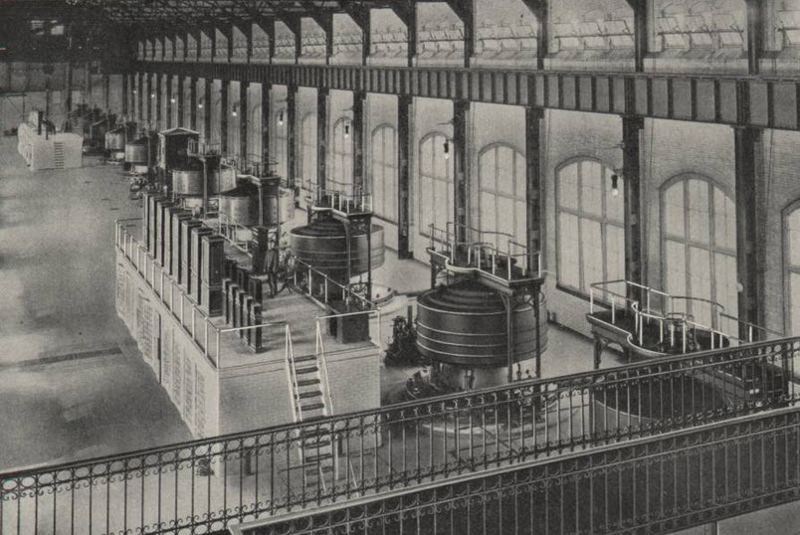
The rivalry behind it was fierce. Thomas Edison's side had bet on direct current (DC) and ran a public campaign to paint AC as deadly. They lost anyway. Nikola Tesla, who invented the AC system, and George Westinghouse, who backed it, proved their case at Niagara Falls in front of the whole world. Within decades, the same technology was lighting homes on every continent.
Canada took notice quickly. The first big power plants on the Canadian side opened around 1905, upriver near the Falls — including the plant that is now the Niagara Parks Power Station. Then came the giants: the Sir Adam Beck generating stations below you, the first opened in 1922. Together they can produce close to 2,000 megawatts of clean electricity, enough to power millions of Ontario homes. The water that runs the lights in a Toronto home may well have started its journey right here.
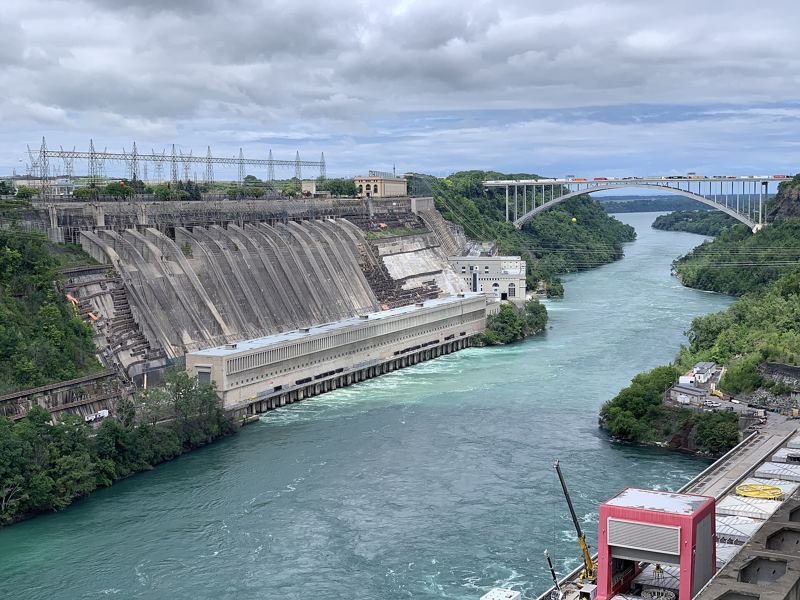
The Americans proved the idea. Canada built an empire out of it.
This sign stands at Sir Adam Beck overlook, Niagara Parkway. See it on the map
Next sign 19The Most Fought-Over Portage Road Portage Road at Lundy's LanePhoto credits
- Changku88, CC BY-SA 4.0, via Wikimedia Commons
- Works of the Westinghouse Electric & Manufacturing Company, Public domain, via Wikimedia Commons

