
Niagara's Hidden Machine
Who controls the water?
Niagara Falls looks completely natural — but the amount of water going over the edge is carefully controlled.
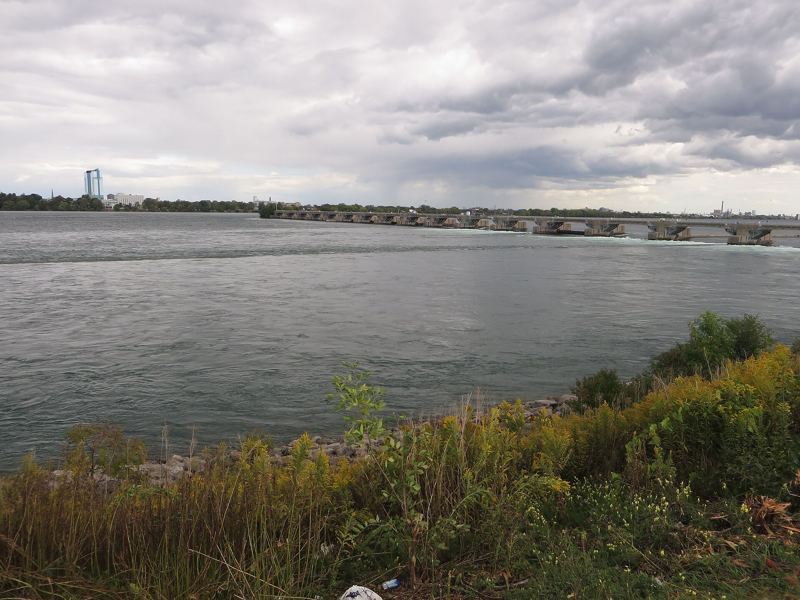
About two kilometres upstream of the Horseshoe Falls sits the International Control Dam, first built in 1954. It helps divide the river's flow between the Falls and the hydroelectric stations on both sides of the border.
In 1950, Canada and the United States signed the Niagara River Water Diversion Treaty. It sets the minimum amount of water that must flow over the Falls to protect how they look.
From April 1 to October 31, during the daytime, at least 2,832 cubic metres of water per second must go over the Falls. At night, and all winter, that minimum drops to 1,416 cubic metres per second. The river's natural average flow is about 5,700 cubic metres per second, so roughly half — and at times up to three-quarters — of the water can be diverted for electricity.
The diverted water travels through huge tunnels to the power stations, spins turbines to make renewable energy, and then returns to the river downstream.
So the Falls you're looking at are real — but they're also regulated. Niagara is both a natural wonder and one of the largest hydroelectric systems in North America.
This sign stands at Niagara Parkway, across from the International Control Dam. See it on the map
Next sign 3Borrowing Power Without Stealing the Show Niagara Parkway, by the Toronto Power Generating StationPhoto credits
- Ken Lund, CC BY-SA 2.0, via Wikimedia Commons
